What Makes Teen Drivers Distracted? Insights from a National Youth Survey
Distracted driving among teens is more than just texting behind the wheel—it’s a complex issue shaped by experience, social influences, perceived risk, and everyday smartphone habits. New research from the National Distracted Driving Coalition (NDDC) and the Traffic Injury Research Foundation USA (TIRF USA), based on responses from more than 1,200 teens across 26 states, reveals how distraction evolves as young drivers gain independence and why certain behaviors become normalized over time.
In this webinar, experts will explore the findings from this groundbreaking national survey and discuss what parents, educators, driver education professionals, and traffic safety advocates can do to better prepare young drivers for the realities of today’s distracted driving environment. The discussion will examine the behaviors teens engage in, the factors that influence those choices, and practical strategies for reducing distraction before unsafe habits become lifelong behaviors.
You’ll learn:
- How smartphone use while driving changes as teens gain driving experience
- Which distracted driving behaviors are most common among different age groups
- Why navigation, music, and other everyday phone tasks are often underestimated as safety risks
- The powerful influence parents, peers, and social norms have on teen driving behavior
- Practical strategies families, schools, and youth programs can use to build safer driving habits and encourage attention management behind the wheel
Whether you work with teen drivers, are raising a new driver, or are committed to improving roadway safety, this session will provide valuable insights into why teens become distracted behind the wheel—and, more importantly, how research-driven education and positive role modeling can help create safer driving habits for the next generation.
Webinar will be hosted on October 22, 2026 at 11AM ET.
Webinar Speakers

Joel Feldman
President, EndDD.org
Joel D. Feldman, Esq., MS, founded EndDD.org after his daughter Casey was killed by a distracted driver in 2009. Since then, he has delivered more than 1,000 distracted driving presentations, helped educate hundreds of thousands of students through a nationwide volunteer speaker network, and developed evidence-based educational resources used across the United States and Canada. Mr. Feldman serves on the National Transportation Safety Board’s National Distracted Driving Coalition and is Of Counsel to the Philadelphia law firm of Anapol Weiss, where he continues to advance distracted driving prevention through education, advocacy, and the law.

Milad Delavary
Research Program Manager and Scientist, Traffic Injury Research Foundation (TIRF)
Milad Delavary, PhD, P.Eng., is a Research Program Manager and Scientist at the Traffic Injury Research Foundation, specializing in transportation engineering, road safety, public health, and mobility research. He has led international research projects evaluating data-driven safety programs and policy interventions, with expertise spanning engineering, statistics, behavioral science, and public health. His work focuses on advancing evidence-based solutions that improve transportation safety and reduce roadway injuries.
Fact Sheet: Key Takeaways
To help reinforce the discussion, we’ve prepared a downloadable summary of the National Distracted Driving Coalition’s Youth Survey, highlighting the most important findings about why teens become distracted behind the wheel and what can be done to prevent it.
Inside, you’ll find:
- Key findings from a national survey of more than 1,200 teens across 26 states, examining how smartphone use, attitudes, and driving behaviors change as young drivers gain experience.
- Research showing how distracted driving is often part of a broader pattern of risky behaviors, including speeding, aggressive driving, driving while tired, and inconsistent seatbelt use.
- Insights into why teens often underestimate the risks associated with common activities like using navigation, managing music, and other everyday smartphone tasks while driving.
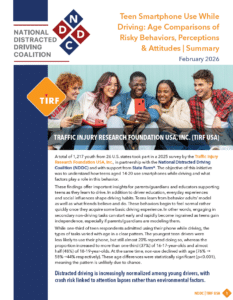
- An overview of the powerful role parents, peers, and social norms play in shaping teen driving habits—and why positive role modeling matters long before teens begin driving independently.
- Practical, research-based strategies that parents, educators, and youth programs can use to help teens build safer driving habits, improve attention management, and reduce distraction before unsafe behaviors become routine.
- Evidence-based takeaways that challenge common misconceptions about driving experience, multitasking, and what it truly takes to become a safe, attentive driver.
Whether you’re a parent, educator, traffic safety professional, or advocate working with young drivers, this resource provides an accessible overview of the latest research and practical strategies you can use to better understand—and reduce—teen distracted driving.
NDDC Steering Committee Press Contacts
Nick Chabarria
Automobile Club Of Missouri


JOE YOUNG
Insurance Institute for Highway Safety