Emergency Responder Struck-By Events: Scope, Cause, Impact, and Need for Action
This webinar will highlight key findings from the report on emergency responder struck-by incidents, focusing on the ongoing risks faced by firefighters, law enforcement officers, EMS personnel, tow operators, and roadway workers. The discussion will explore the causes and impacts of these incidents, gaps in prevention and data collection, and strategies and technologies that can improve roadside safety.
Featuring survivors of struck-by incidents, the webinar will also bring firsthand perspectives on the human impact of these events and the importance of strengthening protections for responders working along the roadway. The conversation will connect research, lived experience, and practical recommendations to support safer emergency response operations.
More resources are available in NDDC’s Roadway Responder Safety, Training, Data, and Public Education Resource appendix.
Webinar Speakers

Jack Sullivan
Director of Training, Emergency Responder Safety Institute

Bob Bemis
Sergeant (Ret.), Pennsylvania State Police Academy
Sergeant (Ret.) Robert Bemis retired in 2017 as a Supervisor in the Operational Training Division at the Pennsylvania State Police Academy in Hershey. With more than 30 years of law enforcement experience, he spent over a decade as a trainer specializing in officer safety, self-defense, and civil disorder tactics. His assignments included Patrol Trooper, Patrol Supervisor, and Forensic Services Unit investigator, where he investigated major crime and accident scenes with an emphasis on evidence collection and fingerprint analysis. In 2015, Sgt. Bemis was severely injured while assisting a disabled motorist on an interstate highway. After months of hospitalization and rehabilitation, he returned to the Academy and continued teaching until his retirement. He chronicled his recovery in his book, Forged in Scars & Stripes: A Trooper’s Victory Over Critical Injury, and shares his survival story with audiences nationwide through live presentations and podcasts. Since retiring, Sgt. Bemis has continued supporting law enforcement training and raising awareness of roadway hazards facing emergency responders. In 2017, he helped develop an immersive virtual reality training simulator for law enforcement. He is also a volunteer Peer Advocate and Director of Training for The Wounded Blue, a national organization supporting injured and disabled officers. A U.S. Marine Corps veteran, Sgt. Bemis served on active duty from 1986–1992 as a Military Policeman, including security assignments with the helicopter squadron responsible for transporting the President (“Marine One”) and at the National Military Command Center at the Pentagon.
Fact Sheet: Key Takeaways
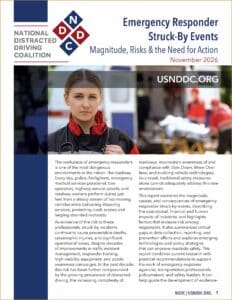
To make this webinar even more actionable, we’ve prepared a downloadable fact sheet that highlights the risks emergency responders face on our roadways and the strategies needed to prevent struck-by incidents.
Inside, you’ll find:
- An overview of the growing threat of emergency responder struck-by incidents, including data showing that more than 340 responders have been struck and killed on U.S. roadways since 2019.
- Insights into the leading risk factors, including distracted driving, excessive speed, impaired driving, low visibility, and hazardous roadway conditions that put responders and roadside workers at risk.
- An examination of the human, operational, and financial consequences of struck-by incidents, from preventable fatalities and serious injuries to damaged emergency vehicles and reduced community response capabilities.
- A closer look at gaps in crash reporting and
 data collection that make it difficult to fully understand the scope of struck-by incidents and develop effective prevention strategies.
- An overview of emerging safety technologies, including connected vehicle alerts, enhanced visibility systems, and smart work zone solutions designed to provide earlier warnings and better protect roadside responders.
- Practical recommendations for improving roadside safety through stronger public awareness, consistent enforcement of Slow Down, Move Over laws, improved responder training, and continued investment in prevention technologies.
Whether you’re educating drivers, supporting emergency response agencies, informing policymakers, or advancing roadway safety initiatives, this fact sheet provides valuable insights and actionable strategies to help protect those who put their lives on the line to protect others.
NDDC Steering Committee Press Contacts
Nick Chabarria
Automobile Club Of Missouri


JOE YOUNG
Insurance Institute for Highway Safety