Is it just me or is everyone distracted?
By: Robyn D. Robertson & Steve Brown
Traffic Injury Research Foundation
In 1896, Henry Wells was driving his newly built motor vehicle in New York when he struck a female cyclist who suffered a fractured leg. Newspaper stories of this early motor vehicle collision described how he was zigzagging all over the road. What if Mr. Wells was distracted? Was he looking for the first restaurant with a drive-thru window? Or did he have a phonograph machine perched on his lap that monopolized his attention? We can’t say for sure because the source of the crash wasn’t clearly recorded in police reports.
Fast forward to 2025 and for many drivers our daily commute convinces us distracted driving is pervasive. There seem to be road users on the phone, fiddling with objects or rubbernecking just about everywhere you look; or is that just me? Whether they’re cruising on a highway, waiting at an intersection, or leaving a school drop off zone, it doesn’t take long to spot a distracted driver. And drivers aren’t the only offenders; look closely and you will see pedestrians, cyclists and riders (e.g., e-scooters) doing it too.
So, how big is the distracted driving problem?
Many estimates suggest distracted driving is a contributing factor in approximately one in four road deaths. The Traffic Injury Research Foundation’s (TIRF) National Fatality Data gathered from both police-reported collision data and coroner reports in Canada back this up. Recently, the US Department of Transportation came to a similar and not-so-surprising conclusion. A report published by the National Highway Traffic Safety Administration (NHTSA) in 2023 examined The Economic and Societal Impact of Motor Vehicle Crashes. This re-analysis of 2019 fatal crash data used a validated imputation model that compensated for considerable underreporting of distracted driving. The results showed distracted driving was estimated to be a contributing factor in 12,405 traffic deaths, or 28 percent of all traffic deaths in the United States in 2019, costing society $158 billion.
 This estimate provides clearer insight into how the distracted driving problem compares to other issues such as speeding or impaired driving. Many of us who work in road safety have no doubt it plays a significant role in crashes. But the truth is that despite improvements in data collection during the past decade, gaps in available distracted driving statistics remain. Efforts to address them are critical to not only inform the development of solutions to address distracted driving, but at a more basic level to demonstrate the urgency with which policymakers must address this problem. In the absence of robust or comprehensive data to create a clearer understanding of the problem, it becomes much more challenging to inspire leadership to prioritize the issue.
Why is it hard to measure distracted driving?
To accurately measure prevalence, or the frequency with which drivers engage in distracted behaviors on the road, it would be necessary to identify every individual driver engaging in the behavior at any given point in time as well as each instance they do it. Think about your last commute. How many instances of distracted driving did you see? How many different drivers? (Hopefully, counting how many distracted drivers you saw did not distract you from driving). Now, ask all your friends, family and neighbors how many distracted drivers they saw, or instances of distracted driving they observed and add those numbers up. It quickly becomes clear why measuring the prevalence of distraction presents a challenge.
And this is just where the complexity begins. Some types of distraction are easy to observe (e.g., phone use or eating while driving) but others are not (e.g., daydreaming, talking to a passenger, using voice-activated technologies). For example, when police officers attend a crash scene and the victim is deceased or no witnesses observed the incident, it can be more difficult to determine whether distraction was a factor in the absence of an obvious indicator like a cell phone showing recent use. This is very different from the presence of alcohol and drugs which can be measured in blood, urine or breath samples. Similarly, collision reconstruction experts can accurately estimate a vehicle’s speed at the time of a crash. In other words, consistently measuring the presence of distraction in every crash is much more complex compared to other types of road risks.
What distracted driving data sources are available?
Distraction is measured in a variety of data sources (think fatal crashes, traffic offenses and convictions, observational studies, naturalistic driving studies using instrumented vehicles, self-report surveys and cell phone user data). Each of these measures provide a different window on the problem which has some advantages, but also some limitations. However, when these different windows are combined, they create a clearer picture that can inform the development and implementation

of policy and legislation to prevent and reduce distracted driving. Although each of these data sources has different strengths and limitations, they are equally important to demonstrate the magnitude of the problem. This in turn can cultivate leadership to take action.
How big is the distracted driving problem?
Key findings from some of the latest data measuring the prevalence of the distracted driving is summarized below in accordance with different sources to provide a current snapshot of the distracted driving in the United States.
Collision data: In 2023, it was estimated that 13% of motor vehicle fatalities in the US were distraction-related (National Center for Statistics and Analysis 2025). However, a more accurate estimate based on a recognized imputation model which accounts for underreporting, suggests 28% of fatalities involved distraction as a contributing factor. An important gap in this data set is whether non-distracted drivers or other road users (e.g., cyclists, pedestrians) were killed in crashes. If this information was available, it could be used to measure how harmful distracted driving is to road users who are not distracted drivers.
Conviction data: National data for distracted driving convictions is limited because these types of offenses can be difficult to prove if the type of distraction is not directly observable and/or no witnesses were present. Haven’t you heard the case about the driver who claimed he was holding a calculator, a chocolate bar, or a package and not a phone? Moreover, in some states, a broad category such as dangerous driving may include distracted driving, speeding, and aggressive driving. In addition, some states may have legislation that limits distracted driving to a specific type of activity (e.g., cell phones). Further, variations in definitions of offenses make it difficult to create a national measure of the problem. For these reasons, the insight provided by conviction data is fairly limited with conviction rates more often being a function of levels of enforcement and available resources. Generally speaking, states with well-crafted laws (e.g., California, Oregon, and Washington) report higher conviction rates.
Roadside or observational surveys: In the United States, the National Occupant Protection Use Survey (NOPUS) is one of the largest observational studies conducted annual by the National Highway Traffic Safety Administration. An observational survey is like you watching all the drivers passing your house and counting how many are distracted, but on a much larger scale and more systematically counted. The most recent data from the 2023 survey shows there has been little change from the previous year’s results. Notably, the prevalence of drivers talking on handheld phones was unchanged. Similarly, observations of drivers manipulating a cell phone also remained steady at about three percent whereas there was a very small increase in the proportion of drivers wearing a visible headset (NCSA 2024).
In Canada, a study conducted in Toronto and Hamilton covertly observed more than 1,100 drivers in live traffic situations between the end of 2020 and the first half of 2021. Researchers reported that more than half of drivers (55.1%) were deemed to be distracted, which was defined as the presence of in-vehicle, phone and external distractions. In addition, mobile phone use was detected among approximately one in seven drivers. Among the reported 24 drivers who were detected committing a variety of driving errors, a large majority (95.8%) were deemed to be distracted. Furthermore, two-thirds of these drivers were illegally using their phones in traffic. This indicates that distracted driving is not only prevalent but also pervasive.
Online self-report surveys: TIRF USA conducts an annual public opinion poll to gauge behaviors, attitudes and opinions of US drivers in relation to various road safety topics. The self-reported prevalence of distracted driving has generally hovered between 11% and 13% between 2019 and 2023 whereas texting while driving has fluctuated between 10% and almost 13%. This is in sharp contrast to concern about texting and driving which has been the top road safety concern in the US since 2019, surpassing concern about speeding, alcohol, drug and cannabis impaired driving, talking on a handheld phone and non-use of seatbelts (Delavary et al., 2024). The 2023 TIRF USA Road Safety Monitor compared pre- and post-pandemic driver behaviors.
A deeper dive into this issue in the 2022 edition (Vanlaar et al. 2023) revealed substantial proportions of respondents continue to admit engaging in the following behaviors despite some declines. Notably,
- 8% drove while distracted in 2022 compared to 13.3% in 2019
- 5% texted while driving in 2022 compared to 12.7% in 2019
- 3% talked on their phone while driving in 2022 compared to 17.1% in 2019.
A number of insurers also undertake online self-report surveys. For example, Travelers Risk Index measures distracted driving attitudes, behaviors, and workplace policies/tools to prevent distracted driving. They conduct two national online surveys. The first is fielded to consumers aged 18-69; and the second targets executives from businesses of all sizes. Approximately one in three respondents (34%) admitted to nearly crashing while driving distracted in 2024. Of note, 87% of those who used a cell phone while driving confessed that they would be less likely to do so if a passenger spoke up.
The surveys are commissioned by Travelers and executed by Hart Research, a leader in survey research and opinion polling. Results are released each April during Distracted Driving Awareness month. Even though distracted driving is risky, many respondents in the 2024 survey admitted to using technology behind the wheel:
- 80% talked on or used a cellphone through hands-free technology
- 79% looked at map directions on a cellphone
- 59% read a text message or email
- 26% updated or checked social media
- 24% took videos or photos.
Of course, while surveys are probably one of the most available sources of prevalence data, an important limitation of these surveys is that sometimes results are difficult to compare across surveys because not everyone asks the same questions or asks the same way. In addition, not all the same questions may be asked each year, which can limit analyses. Perhaps most importantly, perceptions or intentions don’t always translate into actions. For example, Jane Doe could claim to be a very attentive driver when answering a survey on Monday. Then on Tuesday, Ms. Doe could look away from the road on her morning commute to watch a sidewalk carnival performer juggling knives and pumpkins. In other words, while a well-designed self-report survey can be very useful, it’s still only one piece of the puzzle.
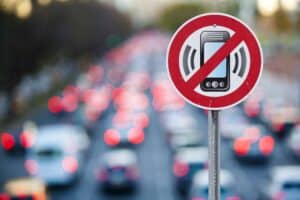
- Cellphone user data: Cambridge Mobile Telematics (CMT) has reported naturalistic data on cell phone use among drivers for the 2020-2023 period. For both handheld and hands-free phone users, the period between 4 p.m. and 5 p.m. was when drivers were most likely to use their phones. Drivers were shown to spend less time on their phones on weekends (170 seconds/hr) compared to weekdays (289 seconds/hr). More recently, in 2025, CMT released a study containing cell phone use prevalence data in 2024. Their data showed that within three weeks after the handheld phone ban was introduced, 8.2 million Ohio drivers spent 1 minute and 32 seconds per hour on their phones while driving compared to an average of 1 minute and 39 seconds prior to the ban, illustrating the value of current prevalence data to assess measures to reduce the problem. In terms of demographics, 72% of men used their phone behind the wheel compared to 57% of women. And among drivers aged 30-44, 78% used their phone behind the wheel compared to 47% of those drivers aged 60 and over.
Zendrive also has a Mobility Risk Intelligence (MRI) platform that not only offers its users direct feedback and coaching to incentivize safe driver habits but also to enable auto insurers to more accurately and fairly cover their policyholders through behavior and usage-based programs. Zendrive’s Collision Report is based upon 185-billion miles worth of data which reveals some of the underlying risky behaviors connected to crashes. In 2021, Zendrive reported that drivers involved in collisions spent an average of 92.2 seconds on the phone. By comparison, drivers not involved in collisions spent an average of 34.9 seconds on the phone. In 2020, Zendrive reported that in 16.8% of collisions, the driver had been using their phone less than five seconds before the crash.
- Roadside smart camera technology: One of the latest innovations that helps transportation agencies measure the prevalence of distracted driving in real time is the roadside camera. These systems can detect distracted drivers in traffic moving at highway speeds and can operate both day and night. The cameras can be mounted in either fixed or mobile locations. This technology presents an important new source of real-world data on distracted driving cell phone use across a whole host of vehicles and drivers on the roadway.
In February 2025, South Lake Minnetonka Police partnered with camera provider Acusensus to utilize these cameras to take photos of distracted drivers on a highway in Minnesota as part of a pilot program. Photos of distracted drivers were captured by cameras and immediately sent to police at the roadside to pull over suspected drivers with confirmed violations to educate them about risks and the importance of safe and legal driving behavior. To alleviate privacy concerns, if officers do not take action, the photos are deleted within 15 minutes. During the month of February, 10,000 distracted driving actions were detected and 300 warnings or citations were issued.
 These new systems allow data to be continuously collected over longer periods in specific locations. It’s like allowing your uncle, the bird enthusiast, to take his camera, filters, lenses and tripod out into the woods to photograph black-throated blue warblers for 24 hours rather than only permitting him to take photos from his dining room window between 10:30 am and 2:15 pm. In other words, prevalence data can be collected to evaluate the effectiveness of educational campaigns, high-visibility enforcement campaigns, or changes to distracted driving laws. At the same time, national and regional safety campaigns can also be bolstered by prevalence data gathered from local roads. This data can also help policymakers and researchers understand which road types or driving conditions have greater incidences of distracted driver phone use.
Why is it important to measure the size of the distracted driving problem?
There are three important reasons to measure the prevalence of the distracted driving problem.
- First, there are a lot of road risks out there such as speeding, impairment, fatigue, and red-light running. There are also many different groups of road users including young drivers, aging drivers, heavy truck drivers and motorcyclists. Prevalence data gives us a better understanding of how distracted driving compares with other types of road risks and allows communities, advocacy groups, policymakers and police services to use their resources more strategically. Road safety professionals are just like everyone else and want to know if they are spending their time and funding dollars in ways that keep the community safe. Resources are not unlimited, and no one wants to waste their time focused on the smallest parts of a problem while the big pieces are left unaddressed.
- Second, it’s impossible to protect everyone all the time. A better understanding of who is most likely to drive distracted and what types of distractions they are most likely to engage in allows road safety professionals to optimize safety for everyone and to protect as many people as possible.
- Finally, prevalence data helps us understand trends and lets us know whether the problem is getting bigger or smaller over time. This information allows researchers and governments to evaluate the effectiveness of different solutions to know whether they are working and how much of a difference they are making. Trends also provide insight into whether a problem should continue to be a priority or whether enough progress has been achieved and it’s time to shift attention to other gaps.
Closing thoughts
Improvements in both quantity and quality of distracted driving prevalence data are needed to show how serious a problem distracted driving is and help us figure out the best and most effective ways to address it. The inability to quantify risk or prioritize the most significant or common sources of distraction could lead to simplistic solutions such as complete bans on the use of all electronic devices. Or worse, a feeling of complacency may lead stakeholders to believe nothing really needs to be done to combat distracted driving.
This is where the NDDC is playing an important role. Its members are tracking reports about the prevalence of distracted driving across the United States, in addition to providing leadership on several other fronts.
You can check out the work of the Coalition here: https://usnddc.org/
Call-to-action:
- Collaborate with like-minded agencies to provide data or enhance their own means of data collection and presentation.
- Share education and enforcement campaigns along with their results.
- Use an app or available phone features to help you avoid distractions while driving.
- Speak up about risks and your choices to stay safe.
- Consider the use of in-vehicle or phone apps that can provide feedback to you about distractions while you are driving.
- Encourage lawmakers to enact and evaluate legislation or consider pilot programs to ensure effectiveness reducing distracted driving.
In addition, more accurate, complete and accessible distracted driving data can provide much-needed guidance and direction in the development of policies and legislation. Similarly, it provides the foundation to evaluate a variety of countermeasures to determine which ones are most effective to address distracted driving, enabling agencies and staff to be efficient in their efforts to reduce distracted driving.
For this reason, the collection of more robust, complete and timely distracted driving data is urgent and essential to determine the relative importance of distraction within myriad and competing road safety priorities.
In closing, as road safety data nerds, it should come as no surprise that we are clamoring for more comprehensive distracted driving data. Preferably, we don’t want you or those close to you to appear in any of the casualty data.

About the NDDC
In 2020, the National Distracted Driving Coalition (NDDC) was formed to accelerate progress in reducing distracted driving. It includes a broad collection of partners in areas such as government, insurance, communications, law enforcement and academia. Their National Action Plan focuses on six key areas, including data. The NDDC identified the need to compile relevant data in order to demonstrate the magnitude and characteristics of distracted driving. Going forward, the NDDC sees the need to identify opportunities to strengthen data strategies.
References
Blincoe, L., Miller, T., Wang, J.-S., Swedler, D., Coughlin, T., Lawrence, B., Guo, F., Klauer, S., & Dingus, T. (2023, February). The economic and societal impact of motor vehicle crashes, 2019 (Revised) (Report No. DOT HS 813 403). National Highway Traffic Safety Administration.
Cambridge Mobile Telematics (2025). The Most Used Apps Behind the Wheel. https://www.cmtelematics.com/report-the-most-used-apps-behind-the-wheel/
Delavary, M. Lyon, C., Mesic, Al, Wicklund, C. Vanlaar, W. G.M. & Robertson, R.D., (2024). TIRF USA Road Safety Monitor 2023: Alcohol-impaired driving in the United States. Traffic Injury Research Foundation, USA, Inc.
Gjorgjievski, M. Petrisor, B., Sprague, S., Li, S., Johal, H., Ristevski, B. (2025). The ROADS project: Road observational assessment of driving distractions. Journal of Safety Research 92: p91-97. https://www.sciencedirect.com/science/article/pii/S0022437524001658
Erdahl, K. (April 12, 2024). Nine New Police Pickups Will Soon Patrol MN Roads for Distracted Drivers. KARE 11, NBC News.
National Center for Statistics and Analysis. (2024, November). Driver electronic device use in 2023 (Traffic Safety Facts Research Note. Report No. DOT HS 813 660). National Highway Traffic Safety Administration.
Vanlaar, W.G.M, Lyon, C., Simmons, S., Wicklund, C., & Robertson, R.D. (2023). TIRF USA Road Safety Monitor 2022: Alcohol-impaired driving & COVID-19 in the United States. Traffic Injury Research Foundation, USA, Inc.
Zendrive, Zendrive Collision Report (Zendrive, 2020).
NDDC Steering Committee Press Contacts
Nick Chabarria
Automobile Club Of Missouri


JOE YOUNG
Insurance Institute for Highway Safety